How to Budget When Your Income Is Irregular
Budgeting with an irregular income means creating a plan for your money even when you do not know exactly how much you will make each month. Managing a variable income budget is a skill required for freelancers, real estate agents, contractors, and anyone whose paycheck fluctuates based on commissions or hours worked. Instead of relying on a steady salary, you must build a financial system that remains stable during both "flush" months and "lean" months. This article is for educational purposes only and does not constitute personalized financial advice. Consult a qualified financial advisor before making significant financial decisions.
The core goal of an irregular income budget is to decouple your spending from your immediate earnings. In a traditional job, you spend what you earned the previous two weeks. In a variable income scenario, you are ideally spending money that was earned 30 to 60 days ago. This creates a "buffer" that protects you from the stress of a slow sales month or a delayed client payment. By treating your personal finances like a business, you can create a predictable lifestyle out of an unpredictable paycheck.
To master this, you need to think of your income as a series of hills and valleys. During the hills, you are not wealthy; you are merely collecting the fuel needed to get through the valleys. Success is not measured by how much you make in your best month, but by how well you manage your money during your worst month.
The Baseline Income Framework
The most effective mental model for managing an irregular paycheck is the Baseline Income Framework. This rule suggests that you should base your lifestyle—your rent, groceries, insurance, and utilities—on the lowest amount of money you reasonably expect to make in a single month. This "floor" ensures that even if you have a terrible month, your basic needs are covered without resorting to high-interest credit card debt.
Consider the example of David, a freelance graphic designer. David’s income fluctuates significantly. In a great month, he might bring in $9,000. In a slow month, he might only clear $2,500. If David sets his lifestyle based on his $5,750 average, he will be $3,250 short during his slow months. Instead, David uses the Baseline Income Framework.
- Identify the Floor: David looks at his past 24 months of earnings and finds his lowest-earning month was $2,400. He sets his "survival budget" at $2,300.
- Separate the Tiers: He categorizes his expenses into "Must-Haves" (rent, basic groceries, electricity) and "Nice-to-Haves" (dining out, streaming services, new clothes).
- The "Sweep" Method: When David earns $6,000 in a month, he pays his $2,300 in essential bills first. He then "sweeps" the remaining $3,700 into a separate high-yield savings account, which he calls his "Hill Account."
- The Drawdown: When a slow month hits and he only earns $1,800, he draws $500 from the Hill Account to cover his baseline expenses.
By living on his "floor" and saving his "ceiling," David eliminates the anxiety of the "feast or famine" cycle. He essentially pays himself a steady salary from the pool of money he has accumulated.
Determining Your Monthly Thresholds
Before you can implement a variable income budget, you must have clear data on what it costs to be you. This requires a three-tiered approach to budgeting. You shouldn't have just one budget; you should have three versions of your budget ready to go depending on the previous month's performance.
The following table illustrates how a freelance consultant named Maria, who earns an average of $5,000 but ranges from $2,000 to $8,000, structures her spending tiers.
| Expense Category |
Tier 1: Survival ($2,200) |
Tier 2: Comfortable ($4,000) |
Tier 3: Growth ($6,000+) |
| Housing/Utilities |
$1,500 |
$1,500 |
$1,500 |
| Groceries/Food |
$400 (Basic) |
$600 (Organic/Bulk) |
$800 (Dining Out) |
| Transport/Fuel |
$200 |
$250 |
$300 |
| Debt Payments |
Minimums only |
Minimum + $200 |
Minimum + $1,000 |
| Entertainment |
$0 |
$200 |
$500 |
| Savings/Investing |
$100 |
$1,250 |
$2,900 |
Most people with irregular income make the mistake of jumping to Tier 3 spending the moment a large check clears. This is dangerous because it leaves no margin for the inevitable Tier 1 months. To find your numbers, use the calculator below to find your number in seconds.
Managing the "Holding Tank" Strategy
A common struggle for those with variable income is the temptation to spend money as soon as it hits the bank account. To combat this, successful freelancers use the "Holding Tank" or "Business Entity" strategy. Even if you are a sole proprietor, you should operate with at least two separate bank accounts: a business/income account and a personal spending account.
Take the case of Elena, a real estate agent. When Elena closes a deal and receives a $12,000 commission check, that money does not go into her checking account. It goes into her "Holding Tank" (a business savings account). Elena has a scheduled transfer on the 1st of every month for $4,500 from her Holding Tank to her personal checking account. This $4,500 is her "salary."
By doing this, Elena achieves three things:
- Tax Preparation: She leaves 25% of every check in the Holding Tank specifically for quarterly estimated tax payments to the IRS.
- Psychological Distance: She doesn't feel "rich" when the $12,000 hits because she knows she is only allowed to touch $4,500 of it this month.
- The Buffer: If Elena goes two months without a sale, her Holding Tank still has enough money to pay her $4,500 salary for several months.
Essential Components of the Holding Tank
- The Tax Reserve: Never treat your gross income as your actual income. For most self-employed individuals in the U.S., setting aside 25-30% of every dollar earned is a safe benchmark for federal and state taxes.
- The Emergency Fund: This is separate from your "Hill Account." While the Hill Account manages monthly fluctuations, the Emergency Fund (3-6 months of baseline expenses) protects you against long-term disability or total loss of work.
- Sinking Funds: These are for non-monthly expenses like annual software subscriptions, professional insurance (Errors & Omissions), or equipment upgrades.
The "Flush Month" Mistake: A Simulation of Failure
The most common and devastating mistake individuals make with a variable income budget is what economists call "Lifestyle Creep" accelerated by "Recency Bias." Recency bias is the mental tendency to believe that because things are going well right now, they will continue to go well indefinitely.
Let's simulate a scenario with Mark, a freelance web developer. Mark has spent years earning a steady $4,000 a month. Suddenly, he lands three major contracts simultaneously and has a "flush month" where he nets $18,000.
The Mistake:
Mark looks at his $18,000 balance and feels a sense of arrival. He decides he has finally "made it." He spends $5,000 on a high-end workstation upgrade he didn't strictly need. He signs a lease on a luxury apartment that costs $1,200 more per month than his previous place. He buys a new car with a $650 monthly payment, convinced that his new $18,000-a-month trajectory is the new normal.
The Cost:
Three months later, the tech market cools. Mark’s income drops back down to his historical average of $4,000. However, his fixed monthly obligations (the "Must-Haves") have risen from $2,500 to $4,350 due to the new rent and car payment. Mark is now losing $350 every single month just by existing.
Within six months, Mark has exhausted his savings and begins carrying a balance on a credit card at 24% APR. Because he didn't account for taxes on that $18,000, he also owes the IRS $4,500 that he no longer has. This "tax debt" combined with high-interest credit card debt creates a downward spiral that takes years to escape.
The Lesson:
The "cost" of Mark's mistake wasn't just the $5,000 he spent on the computer. It was the permanent increase in his baseline expenses. When your income is irregular, you must never increase your fixed costs based on a peak month. Only increase fixed costs based on a sustained increase in your average income over a 12-to-18-month period.
Tactical Steps for Financial Stability
To transition from a chaotic financial life to a structured variable income budget, follow these prioritized steps:
- Calculate Your Survival Number: Add up your rent/mortgage, utilities, basic food, insurance, and minimum debt payments. This is the absolute minimum you need to survive.
- Build a "One-Month Buffer": Your first goal is to save enough in your Holding Tank so that on April 1st, you are paying your bills using money you earned in February or March. This stops the "waiting for the check to clear" stress.
- Automate Your Tax Savings: Every time a payment hits your account, immediately move 25% to a dedicated tax savings account. Do not look at this money; it is not yours.
- Establish a "Salary" Transfer: Set up an automatic transfer from your business/savings account to your personal checking. Treat it like a real paycheck. If you earn more than your salary, the extra stays in the "tank."
- Prioritize High-Interest Debt: During your "hill" months, use the surplus to aggressively pay down debts with interest rates above 7%. Reducing your monthly debt obligations lower your "survival number," making your financial life more resilient to low-income months.
Choosing Your Budgeting Method
There are several systems that work well for irregular income. You should choose the one that matches your personality:
- Zero-Based Budgeting: You give every dollar a job. This is excellent for those who want total control but requires the most time.
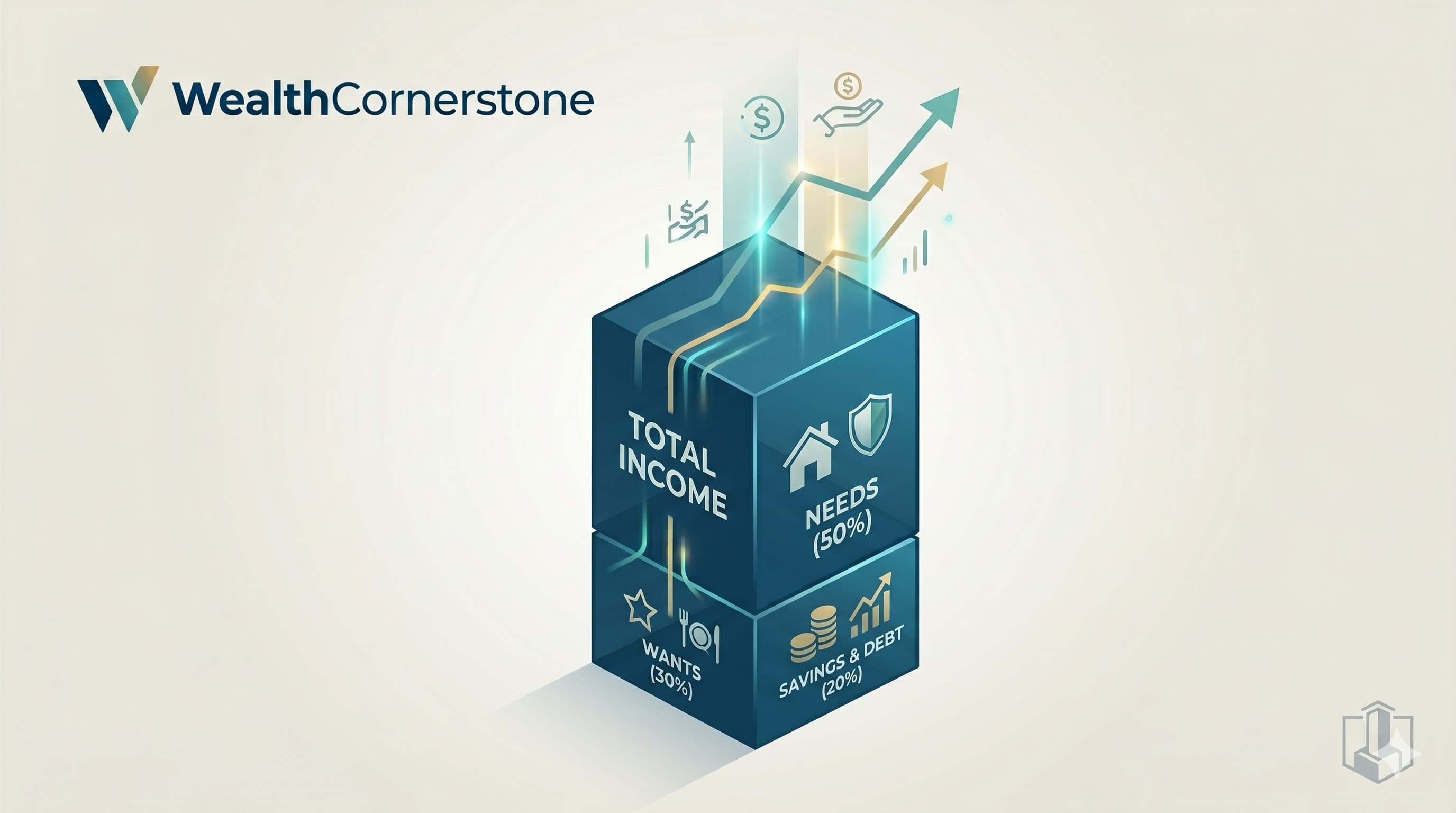
- The Percentage Method: You allocate fixed percentages (e.g., 50% needs, 20% savings, 30% wants) to every check that arrives, regardless of its size.
- The "Proportional" Approach: You pay your most important bills first (rent, taxes) and then distribute the remainder among lower-priority categories.
Regardless of the method, the key is consistency. Irregular income requires more frequent check-ins—usually once a week—to ensure your spending hasn't outpaced your actual cash on hand.
Conclusion
Mastering a variable income budget is less about complex math and more about discipline and systems. By living on your baseline income, maintaining a "Holding Tank" for your earnings, and refusing to inflate your lifestyle during peak months, you can enjoy the freedom of self-employment without the financial volatility. The most important step you can take today is to define your "survival number" so you know exactly what your floor looks like.
To continue building your financial foundation, explore our comprehensive guide on the fundamentals of budgeting strategies to see which specific framework aligns with your long-term goals.
Frequently Asked Questions
How much should I save for taxes if my income is unpredictable?
Most financial experts and the IRS suggest that self-employed individuals should set aside between 25% and 30% of their gross income for taxes. This covers the Self-Employment Tax (which is 15.3% for Social Security and Medicare) plus your standard federal and state income taxes. Because you don't have an employer withholding these for you, you must act as your own payroll department. It is safer to over-save and receive a "refund" from yourself at the end of the year than to be under-prepared and face IRS underpayment penalties.
Should I pay off debt or build a buffer first?
When your income is irregular, the "buffer" is actually more important than aggressive debt repayment in the very beginning. Aim to save at least $1,000 or one month of "survival" expenses before you start putting every extra dollar toward debt. If you put all your extra cash into debt and then have a zero-income month, you will be forced to use a credit card for groceries, which puts you right back into the debt cycle. Once you have a basic buffer, you can use your "flush" months to make large lump-sum payments toward your highest-interest balances.
How do I handle "feast" months without overspending?
The best way to handle a "feast" month is to use a "Holding Tank" account. When you receive a large windfall, move it into a separate savings account immediately. Do not leave it in your primary checking account where it is easily accessible via your debit card. Wait at least 30 days before deciding how to allocate any surplus above your normal "salary." This cooling-off period helps eliminate the dopamine-driven urge to celebrate with a large purchase and gives you time to see if the following month will be a "famine" month that requires those funds.