The envelope method is a simple way to manage your money by using physical cash divided into paper envelopes to represent different spending categories. By allocating a set amount of cash for things like groceries, gas, and entertainment at the start of the month, you create a tangible boundary for your spending. This system matters because it forces a level of discipline that digital transactions often lack, helping anyone struggling with "lifestyle creep" or revolving credit card debt to regain control of their finances immediately.
If you have ever looked at your bank balance at the end of the week and wondered where your hard-earned money went, you are not alone. In an era of one-tap mobile payments and "Buy Now, Pay Later" schemes, the friction between wanting something and buying it has virtually disappeared. Cash budgeting restores that friction, making you physically feel the departure of every dollar you spend. Whether you are trying to pay off high-interest debt or simply want to stick to a grocery budget, this old-school technique remains one of the most effective financial tools available.
This guide will walk you through the mechanics of the system, the psychology behind why it works, and the common pitfalls that beginners face. By the end of this article, you will have a concrete plan to transition from a "swipe-and-pray" mentality to a deliberate, category-based spending plan that ensures you never overspend again.
The Golden Rule: The Zero-Based Allocation Framework
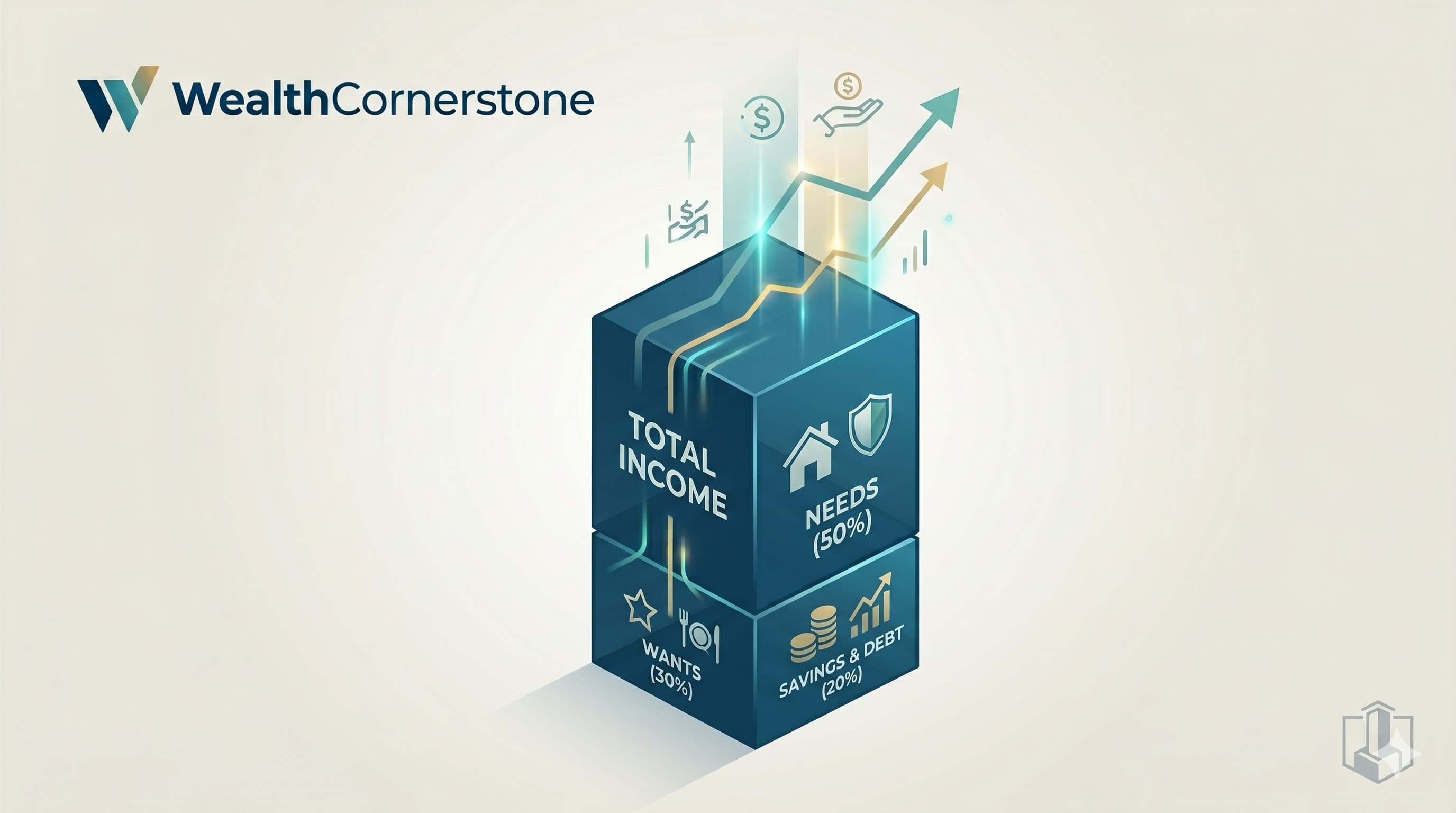
The central framework that governs the envelope method is the Zero-Based Budgeting rule. This rule dictates that every single dollar of your monthly income must be assigned a "job" before the month begins. In the context of the envelope system, this means your total take-home pay minus your fixed expenses (like rent or insurance) and your savings goals must equal the total amount of cash distributed into your envelopes.
The formula looks like this: Total Income - (Fixed Bills + Savings/Debt Payments) = Total Cash for Envelopes.
To see this in action, let’s look at a real-world example. Consider Marcus, a graphic designer who brings home $4,500 per month after taxes. Marcus has struggled with "miscellaneous" spending that eats into his ability to save for a house down payment. Using the zero-based framework, Marcus maps out his month:
- Total Monthly Income: $4,500
- Fixed Expenses (Paid Digitally): $2,200 (Rent, Utilities, Insurance, Internet)
- Savings/Debt Goals: $800 (Roth IRA contribution and extra student loan payment)
- Total Remaining for Envelopes: $1,500
Marcus then takes that $1,500 in cash and divides it into specific spending categories:
- Groceries: $600
- Dining Out/Entertainment: $300
- Gas/Transportation: $200
- Household Supplies/Toiletries: $150
- Personal Spending/Hobby: $250
By the time Marcus finishes, every dollar is accounted for. The $1,500 is placed into five physical envelopes. The most important rule of this framework is the "Hard Stop." If Marcus goes to the grocery store on the 25th of the month and finds he only has $15 left in his "Groceries" envelope, he cannot simply swipe a credit card to cover a $50 bill. He must either put items back or find another envelope (like "Dining Out") to take money from. This forced scarcity is what drives behavioral change.
How to Set Up Your Envelopes in 5 Practical Steps
Setting up a cash budgeting system requires more than just buying a box of envelopes; it requires a strategic look at your spending history to ensure your categories are realistic. If you set your "Entertainment" budget at $50 but usually spend $300, the system will fail within the first week.
Follow these steps to ensure a successful launch:
- Audit Your Last Three Months: Look at your bank statements and credit card bills. Identify which categories are "variable"—meaning they change based on your choices—rather than fixed. These variable categories are your candidates for the envelope method.
- Define Your Spending Categories: Common categories include groceries, restaurants, clothing, beauty/haircuts, gas, and pet supplies. Don't create too many; 5 to 7 envelopes are usually the "sweet spot" for most households.
- Label and Fill: Write the category name and the monthly limit on the outside of each envelope. When you receive your paycheck, go to the bank and withdraw the exact amount of cash needed to fill them.
- Spend Only from the Corresponding Envelope: When you go to the pharmacy, you pull cash only from the "Household" or "Personal" envelope. Do not mix the funds.
- Track as You Go: Some people find it helpful to write the remaining balance on the back of the envelope after each transaction. This provides an instant visual of how much "runway" you have left for the month.
Take the case of Sarah, a 32-year-old teacher. Sarah realized she was spending nearly $500 a month on "little things"—convenience store snacks, impulsive Amazon purchases, and weekend coffee runs. She decided to create a "Small Wins" envelope with $100 for the month. By physically seeing the $20 bills dwindle, she became much more selective. She started making coffee at home to save the envelope cash for a Friday afternoon treat. This shift from mindless spending to intentional spending is the primary benefit of the system.
Cash vs. Digital: Analyzing the Numbers
While many people prefer digital budgeting apps for their convenience, the numbers often tell a different story regarding efficacy. Behavioral economists have long noted the "pain of paying" phenomenon. When you use cash, your brain registers the loss of a physical resource. When you swipe a card, the transaction is abstract, and the "pain" is delayed until the bill arrives weeks later.
The following table compares the physical envelope method against modern digital budgeting tools to help you decide which approach fits your lifestyle.
| Feature | Physical Cash Envelopes | Digital Budgeting Apps |
|---|---|---|
| Spending Limit Type | Hard Limit (Cash physically runs out) | Soft Limit (Notifications and alerts) |
| Psychological Friction | High (Harder to part with physical bills) | Low (Swiping is frictionless and easy) |
| Transaction Tracking | Manual (Immediate awareness) | Automated (Delayed awareness) |
| Overspending Risk | Very Low (Requires intentionality) | Moderate to High (Easy to ignore alerts) |
| Best For | Chronic overspenders and beginners | Disciplined budgeters and tech-savvy users |
Research from institutions like MIT and Dun & Bradstreet has suggested that consumers are often willing to pay significantly more—sometimes up to 100% more—when using a credit card versus cash. This is particularly true in "spending categories" like dining and retail. For a household spending $2,000 a month on variable expenses, switching to cash could theoretically save them $200 to $400 a month simply by curbing the impulse to buy more expensive items or add "add-ons" to their cart.
Use the calculator below to find your number in seconds and see how much your savings could grow by optimizing your monthly contributions.